
Inside the Berkeley County Most Wanted Program
The Berkeley County Sheriff's Office publishes no Most Wanted page. Its public navigation, county data links, Judicial Services, Records, and reports all lack one. The office does serve several warrant types, but no roster of them appears anywhere public. So the honest route here is verification, not a list. A Most Wanted program is a chosen public-safety tool. It never shows every warrant, every court, or every current service status in Berkeley County. For anything case-specific, the issuing court remains the answer, and that is where to look.
How Berkeley County Most Wanted Lists Work
South Carolina's public-safety directory is where statewide and regional programs live. One is the supervision-fugitive list kept by the Department of Probation, Parole and Pardon Services, which changes over time. That is a state program, not a Berkeley County Sheriff list, and it leaves out most court warrants. Nothing on the state page fixes an update schedule or a reward amount for any Berkeley County program. No countywide roundup or amnesty exists here. A shifting curated list can't count active warrants or stand in for court records. For the current official programs, open South Carolina's public-safety list page, which shows what the state itself publishes.
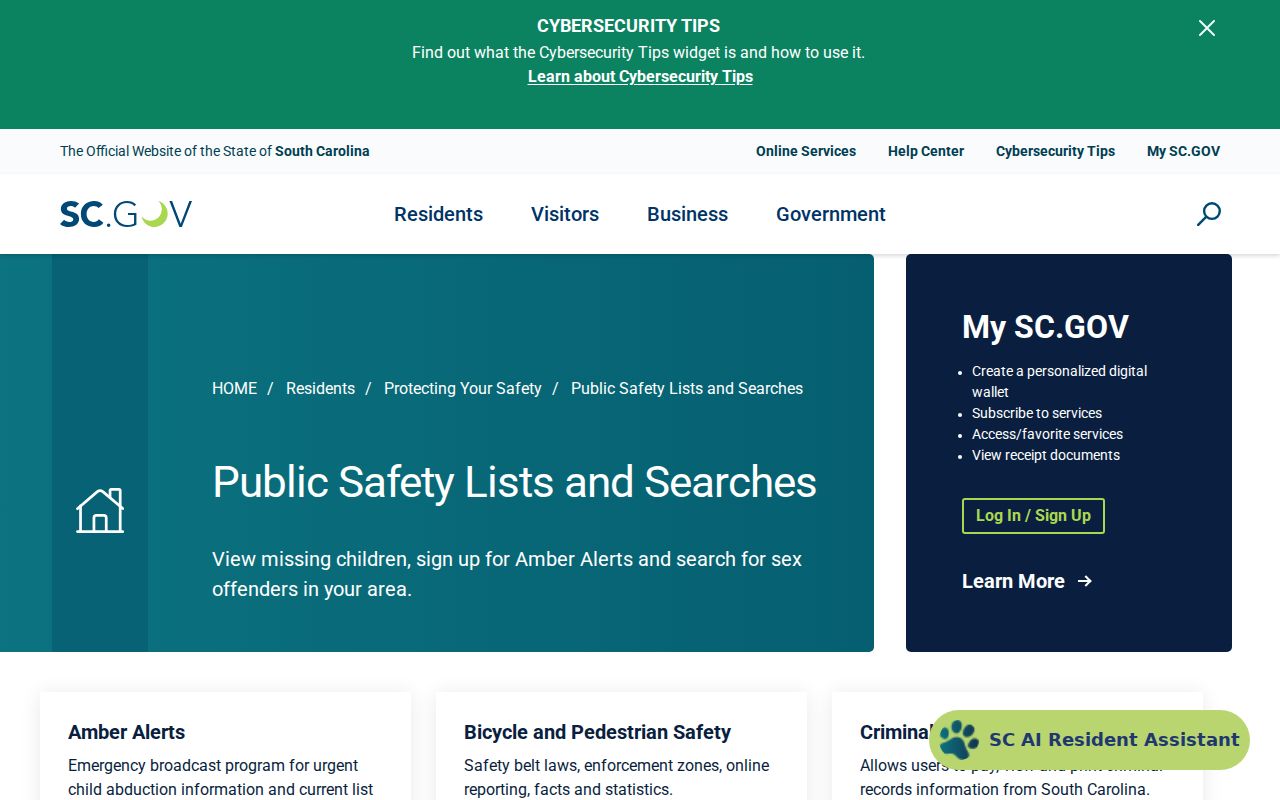
South Carolina's public-safety list page links official programs and describes their separate purposes.
Sending a Most Wanted Tip Safely
Use only the tip method the program itself names. SCDPPPS lists a confidential tip line at 1-888-761-6175 and sends emergencies to 911. That number belongs to its supervision-fugitive program. It is not a Berkeley County warrant-status line. The program page promises no county reward and no guaranteed response time. Never confront a person or spread unverified claims online. In an immediate emergency, call 911. For a court-status question, contact the issuing court rather than any tip line.
South Carolina Supervision-Fugitive Tip
Department of Probation, Parole and Pardon Services
1-888-761-6175
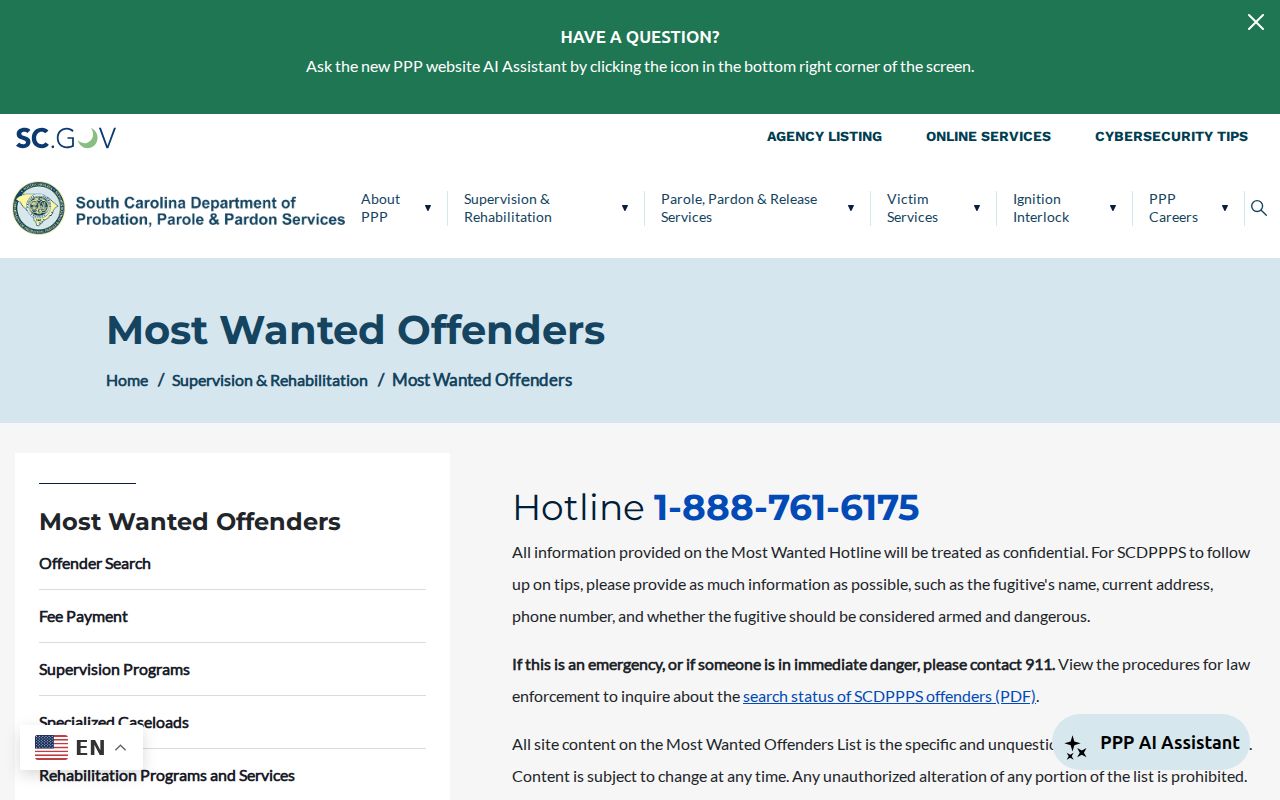
The agency's Most Wanted program page posts the current tip instructions for its Berkeley County supervision-fugitive cases.
How Most Wanted Differs From an Active Warrant
A Most Wanted list highlights cases a program picked. An active warrant is different. It is a court or law-enforcement status, and only the office holding the record can confirm it. Berkeley County's Sheriff publishes no public warrant roster, and the state lists are not full court inventories either.
| Curated program | Warrant status |
|---|---|
| Selected by a named agency or program | Created and controlled by the issuing court |
| May change as the program updates | Can change after service, recall, or court action |
| Tip route is for program information | Status route is the court or responsible agency |
| Does not show every case | May not appear in a public online interface |
The South Carolina Public Index shows public case context in Berkeley County, not every warrant event. SLED CATCH is criminal history and expressly excludes wanted-person information.
Berkeley County Has No Public Sheriff Roster
The Sheriff's homepage offers other public tools and service contacts but no warrant search and no Most Wanted page. Its Judicial Services Division serves criminal arrest, check, Family Court, General Sessions, and Magistrate bench warrants. None of those records appear as a roster. For current status, go to the court named in the case. The Clerk holds General Sessions and Family Court records, while the Magistrate or municipal clerk handles its own court's matter. Sheriff's Records can explain its record-request route, and Hill-Finklea answers booking and custody questions.
Berkeley County List Limits and Verification
Any result can be stale, incomplete, or tied to a different court. Public Index warns of timing and confidentiality limits; SLED CATCH excludes wanted-person data; a public-safety list covers only its own program. A name missing from one source does not prove no warrant exists. For a public case, search the Berkeley Public Index and then call the issuing clerk. For Sheriff service, ask Sheriff Records or Judicial Services which channel applies. No complete statewide public warrant lookup exists. Skip the private people-search pages too. Berkeley Public Index and the SLED CATCH disclaimer each explain what they cover, and the difference between public case access and criminal-history search is the point to grasp in Berkeley County.
What the Berkeley County Data Cannot Tell You
Annual reports count processing, not live inventory. Berkeley County recorded 2,853 warrants served in 2020, plus 1,217 warrants entered in 2021 and 1,356 in 2022. Those are different measures from different years. They say nothing about how many warrants remain active today. The 2023 detention report lists 4,470 bookings, and bookings count people, not warrants. No jail count, old service number, or app announcement adds up to a current Most Wanted program.
Federal Lists Are Another System
Federal fugitive work is its own system. The U.S. Marshals and a regional task force describe interagency efforts, but their public pages are not county lists. A federal warrant may be sealed or may never appear as a standalone public record. No Berkeley County search can confirm a federal matter. For a federal case, contact the federal court clerk, a lawyer, or the responsible agency. Use a program contact only for its stated purpose. A task-force page implies no local County Sheriff roster. The Carolinas Regional Fugitive Task Force page describes a partnership, not a public search portal.
When You Believe You Are Listed
Before you act on a Most Wanted page, slow down. Do not confront an officer, and do not approach anyone named on a list. Call the issuing court or a lawyer instead. That is the safe way to ask about a Berkeley County case and learn the right next step. Matters tied to state supervision go through that agency's own current instructions, and a true emergency still means calling 911. Helping a relative? Keep case numbers and personal details private. The Sheriff's main line handles Sheriff questions, while the Clerk or a municipal court verifies its own file, since no curated page decides a court's status.
If you think a listing concerns you, speak with counsel and confirm with the issuing court. Do not rely on an online roster to choose where or when to appear.
Berkeley County Most Wanted Access Rules
Getting a court record in Berkeley County runs through state FOIA exemptions, Court Rule 10, sealed or confidential files, and juvenile protections. A request only seeks an existing record. It does not create a live warrant feed, and a custodian may redact or withhold material under the rule that applies. The county routes its FOIA requests through one official portal, while a city may hold its own municipal record. When you need to confirm a case, ask the issuing court directly rather than requesting a roster or a dossier on someone else. County FOIA instructions and Court Rule 10 spell out the access path.
Berkeley County Most Wanted vs Court Records
A Most Wanted page is a program notice, not a court file. The court keeps its own record, and the serving agency keeps another. Each answers a different question, and Berkeley County's public pages never merge them into one search. To check your own matter or a relative's, start with the court named on the papers. The Public Index can surface eligible case context, and the issuing clerk can confirm what the court shows today. A Sheriff record request, meanwhile, follows the county FOIA process and stays subject to its exemptions.