
Berkeley County Warrant Checks
Begin by reading the court named on any citation, notice, or case paper. For public trial-court context, open the Berkeley entry to the South Carolina Public Index along with its official search guide. That system is not a live warrant roster. Traffic tickets run through a separate state ticket search and payment tool. A blank result can mean timing, court coverage, or a record limit. When the court is unclear, the Berkeley County Magistrate office can point a caller to the right Summary Court. The Clerk of Court handles General Sessions and Family Court records. Call the Sheriff or Records office for county service questions, and Hill-Finklea for custody. Before paying or appearing, ask the issuing clerk what step applies to your Berkeley County case.
- Read the paper for the court, municipality, case or citation number, and date.
- Use Public Index for eligible public case context, with one or two filters at first.
- For traffic, search the state ticket tool by citation, license and state, or name with date of birth.
- Call the issuing court about current FTA or warrant status and the required next step.
- Use the Sheriff for its service question and Hill-Finklea for booking or release questions.
Keep personal identifiers out of public posts and ordinary email. A Berkeley County lawyer can explain options for a specific case.
No County Sheriff Warrant Roster
The Sheriff's own pages describe Judicial Services, Records Management, and internal warrant verification, but Berkeley County posts no public active-warrant or most-wanted search. Its Warrants Unit serves criminal arrest, check, Family Court, General Sessions, and Magistrate bench warrants. That service role does not turn internal law-enforcement systems into a public list. Without an online roster, use the issuing court or the Public Index for eligible case context. The Sheriff's main or Records line can answer a records question. A narrow county FOIA request may seek an existing record, though published report rules do not promise that every warrant file is releasable.
Berkeley County Sheriff's Office
223 North Live Oak Drive
Moncks Corner, SC 29461
843-719-4465
Warrants in Berkeley County: The Main Types
Which court issued the paper, and why? A Magistrate can issue arrest or search process in summary matters. Municipal Courts take city and town traffic, ordinance, and qualifying misdemeanor cases. General Sessions, the criminal division of Circuit Court, handles the serious charges, and Family Court runs its own enforcement path. South Carolina forms also distinguish a bench warrant issued after failure to appear from one issued after trial in absentia. A search warrant targets a place, person, or property to be searched. It is not a paper demanding an arrest. Berkeley County sources do not use capias as a local public label, so ask the issuing court what that term means before relying on it.
| Process | How it arises | Likely issuing court |
|---|---|---|
| Arrest warrant | Judicial criminal process | Magistrate or authorized court |
| Bench warrant | Missed appearance or court order | Issuing lower or trial court |
| Family Court warrant | Enforcement of an underlying order | Family Court |
| Search warrant | Probable cause to search identified property | Authorized judicial officer |
Public Index Is Case Context
The South Carolina Public Index provides eligible public case information, and the Judicial Branch guide explains how its filters interact. Selected filters work together, so a broad stack of them can actually hide a match. Start with the county or agency plus one or two known fields, then narrow from there. A case number opens available detail. Even so, the record does not guarantee that every service or return event shows up online. The Berkeley endpoint may lag on recent entries, and sealed matters, confidential records, or some municipal items may never appear. The clerk remains the official court record source for Berkeley County. Treat the field list as a summary of the guide, not a promise that every case fills every column.
| Search field | Control | Use |
|---|---|---|
| Court Type and Court Agency | Dropdowns | Limit the court or agency when known |
| Case Number | Text | Enter the identifier from court papers |
| Name | Text | Last, first, middle, and suffix fields |
| Case Type and Subtype | Dropdowns | Narrow the kind of case |
| Date Type and range | Choice and dates | Search a known filing or event period |
Berkeley County Has No Statewide Warrant Lookup
South Carolina's public search tools each cover a different record type. The Public Index handles eligible court cases, the traffic site locates citations, and SLED CATCH is a criminal-history product that excludes wanted-person information. None of them supplies a complete live warrant list for Berkeley County. Pick the tool that matches the record, then ask the issuing court or the responsible agency to confirm a warrant's status. A missing result does not prove process was recalled.
Berkeley County Warrant Records: What They Show
Official forms show what a court may record on a warrant: jurisdiction, case or docket number, charge, issuing judge, command to an officer, service return, and bond fields. The Public Index guide lists its own set: name, party type, case number, filed date, status, disposition date, type, subtype, judgment number, and court agency. Those case fields do not add up to a complete warrant status screen. A blank form is a safer model here than a filled one. South Carolina warrant forms can carry Social Security numbers, birth dates, addresses, and physical descriptors, and those private values stay out of any public explainer. Berkeley County documents no local public warrant-number format. The proper court sets bond amounts.
| Case number | Links the public case to court filings; no countywide warrant-number pattern was documented. |
|---|---|
| Issuing court | Shows where status, hearing, or recall questions should go. |
| Charge or basis | May describe the process or underlying order. |
| Service return | Records an officer's reported action, not a live public feed. |
| Bond field | May appear on a form; it is not a current countywide bond quote. |
Who Issues and Serves Berkeley County Warrants
Courts issue the process, authorized officers serve it, clerks keep the records, and detention staff hold custody. The Berkeley County Clerk of Court maintains Circuit, General Sessions, Family Court, docket, bond, and court-ordered money records. Magistrate and municipal clerks keep their own lower-court files. The Sheriff's Judicial Services Division covers court security, warrants, civil process, and judgments. Hill-Finklea handles booking and custody, but the detention center does not replace the clerk, and it cannot say whether a court recalled a warrant.
Warrant flow: issuing court → court clerk record → Sheriff or municipal officer service → detention only if custody occurs.
Use the South Carolina courthouse directory to find the court location, then contact the Berkeley County office tied to the case.
Different Records Desks Have Different Jobs
Different desks in Berkeley County own different paper. The Clerk of Court keeps court filings, while Sheriff Records Management answers for sheriff-held reports, FOIA and Rule 5 responses, expungement orders, and related entries. Booking records at Hill-Finklea sit with separate contacts there. So name the record you want and its custodian instead of asking one office for "all records." The county now routes FOIA requests through its portal, and email and fax submissions ended in 2020. When you request something, ask for an existing record, such as a policy, a redacted form, or an aggregate count, and give a clear date range. South Carolina Code sections 30-4-30 and 30-4-40 govern access and exemptions. One caveat worth remembering: FOIA is not a real-time warrant lookup.
Warrant Record Access Under South Carolina Law
Access to Berkeley County warrant records follows South Carolina rules with real limits. The state's Freedom of Information Act lets you inspect, copy, or request electronic records, though exemptions and custodian procedures apply. Court Rule 10 opens court records to the public but seals some confidential material. Law enforcement can withhold a record tied to an active investigation. Juvenile records sit behind stronger walls. Code sections 63-19-2010 and 63-19-2020 keep them confidential, and South Carolina's 2026 judicial and law-enforcement privacy protections shield certain personal details in public court access. Ask the Clerk or the issuing court about the specific record you need, since each office controls what it can release.
Access rules: South Carolina Code sections 30-4-30 and 30-4-40 set access rights and exemptions. Court Rule 10 addresses public court access. Sections 63-19-2010 and 63-19-2020 protect juvenile records.
Historical Counts Are Not an Active List
Treat annual counts as history, not a live list. Berkeley County Sheriff reports show 2,853 warrants served in 2020, plus 1,217 entered in 2021 and 1,356 entered in 2022. Those are different actions in different years. None counts current outstanding warrants or unique people. The 2023 detention total of 4,470 bookings measures jail intake from multiple agencies, not warrants alone. Goose Creek's 2020 report even splits arrest-warrant service from bench-warrant service. So read entered, served, booked, and arrested in their original context, and never treat one figure as a count of open Berkeley County warrants.
Handling a Berkeley County Warrant
No single Berkeley County recall desk, bond schedule, or universal online payment method exists. Ask the issuing court directly. It may require a motion, a hearing, payment, an appearance, a surrender, or some other step before it recalls a warrant. A lawyer can advise on your specific case. For a Family Court matter, use the Clerk/Family Court channel. A municipal ticket belongs with the town court. If someone is already in custody, call Hill-Finklea about booking and release procedure, then confirm what the court will do. Keep proof of any payment, and remember that a blank online result does not prove a warrant was recalled. Only the issuing court can say.
Before acting: Get the issuing court's current instructions. Do not rely on a generic payment page or an online status to promise that a warrant has cleared.
Public Safety Lists Are Curated
South Carolina's public-safety page links several specialized lists. One comes from the Department of Probation, Parole and Pardon Services, which runs a changing supervision-fugitive program and posts an official tip line. That program is not a Berkeley County court docket. It is not a complete list of active warrants either. The Berkeley County Sheriff posts no Most Wanted roster on its official pages. The Sheriff has announced a smartphone app, though its notice names no warrant-search feature. A curated list or app cannot confirm a local warrant. Bring your question to the Berkeley County court that owns it, or to the Sheriff for the matters it handles.
Berkeley County Warrant Terms in Plain Words
South Carolina forms separate issuance, service, and return. A Berkeley County warrant record can pass from a lower court to the Clerk, the Sheriff, and the solicitor, so one system may show only a single stage. Knowing these terms helps you ask a clear question. It also keeps you from reading a public case entry as the final current status.
- Issued
- The court created the process.
- Served
- An authorized officer carried it out or delivered it.
- Returned
- The officer reported the action back to the court.
- Recalled or quashed
- The court changed or ended the process; confirm its exact wording.
- FTA
- Failure to appear for a required court event.
City Warrant Records in Berkeley County
Every town in Berkeley County keeps its own court contacts. Summerville sends outstanding-warrant questions to its Warrant Division. Goose Creek publishes court and service procedures but no public roster. Hanahan gives written clerk instructions. Moncks Corner posts a payment warning, and St. Stephen links police information plus ticket payment. Start a city case with the court named on the paper.
Summerville Warrant Records
50,915 residents, 2020 Census. Town court spans three counties.
Goose Creek Warrant Records
45,946 residents, 2020 Census. City court and police handle local process.
Hanahan Warrant Records
20,325 residents, 2020 Census. Court instructions define local steps.
Moncks Corner Warrant Records
13,297 residents, 2020 Census. County seat with a separate town court.
St. Stephen Warrant Records
1,571 residents, 2020 Census. Town police assist the County Sheriff.
The city order here reflects the 2020 Census incorporated-place table, not warrant volume. A county-issued matter belongs with the county office map above; each town page covers its own municipal contacts. The U.S. Census Bureau supplies these counts. View the 2020 incorporated-place data. The figures orient readers, nothing more.
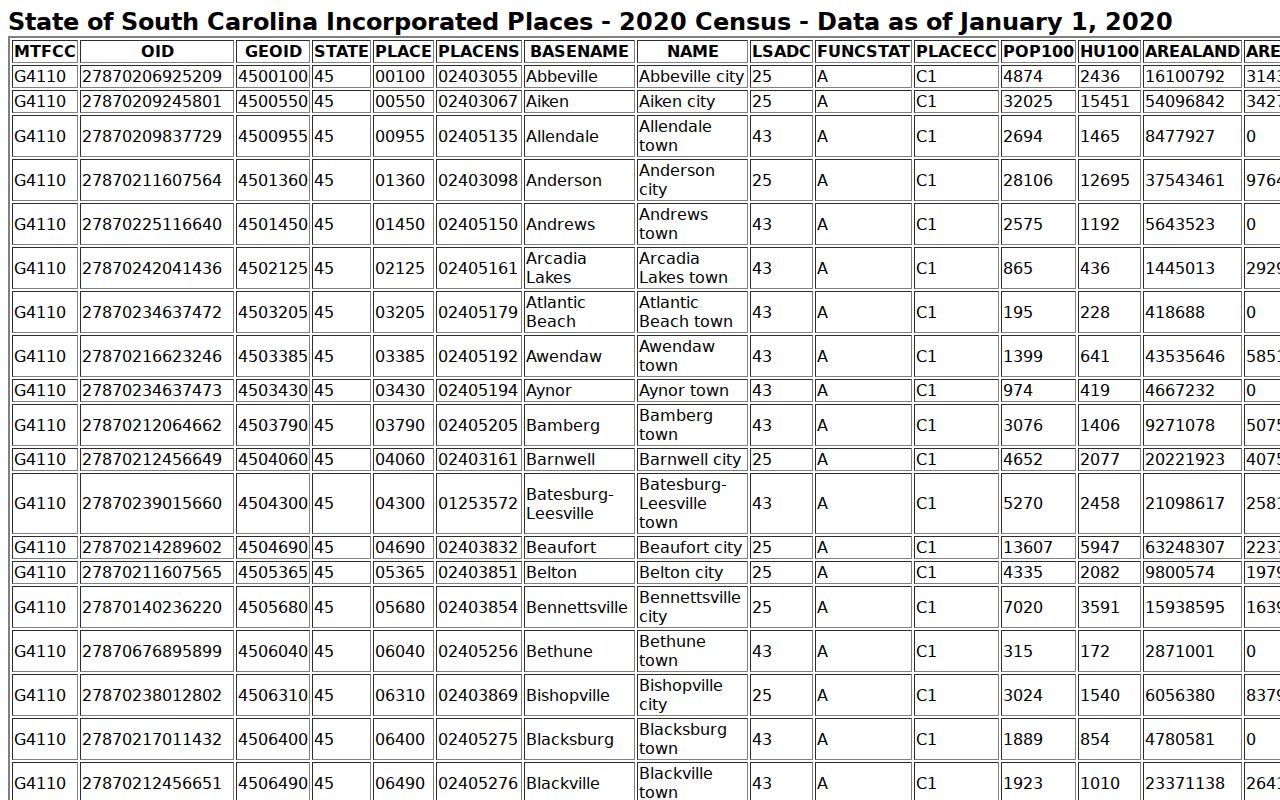
The Census table above supplies the population figures behind this city order. It says nothing about Berkeley County warrant activity.